Space Runaway Ideon(伝説巨神イデオン) MOVIE
Overview:
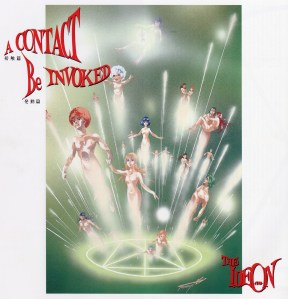
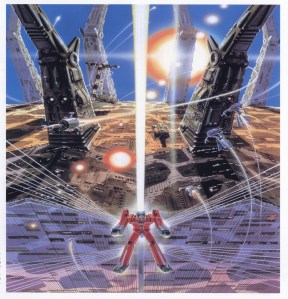
The general director is Yoshiyuki Tomino, the director is Toshifumi Takizawa, the animation director is Tomonori Kogawa, and the music is Koichi Sugiyama. After the TV version ended, Tomino and the staff planned a movie version to make up for the sudden ending due to the early ending. Originally, they planned to handle it as a trilogy like the Gundam movie, but since this work was not as popular as Gundam, there was a possibility of a box office failure, so they decided to finish it all at once so that it would not be cut off in the middle. The two works that came out as a result were “CONTACT” and “INVOKE”, but since they were shown at the same time when they were released, they were actually one work. The CONTACT was a summary of the contents of the TV version, and was produced with the intention of reminding people of their memories before the ending. The reviews were not very good, and even Tomino himself said, “The development part of the introduction, development, turn, and conclusion was completely blown away. It was a weak point as a play,” and later said, “I will watch the Induction-hen again before I die, but I will not watch the CONTACT.” The Initiation Chapter is the true final chapter of Ideon, and when fans or Tomino evaluate it as a masterpiece, this is what they mean. The battle direction is so excellent that even if you don’t understand the story, you’ll be satisfied. Along with Mobile Suit Gundam: Char’s Counterattack and Mobile Suit Gundam F91, this is considered one of the Tomino animes with the best animation. It is the final ending chapter that produced the story that was not covered in the TV version. However, it is not completely new, and it covers the middle part of the TV version (the part about Planet Caral) that was not covered in the Contact Chapter and the latter half of the TV version (episodes 33-39) in the first 15 minutes. The events on Planet Caral were changed to take place after the Contact Chapter, or after episode 32 in the TV version, and the story development, such as the process of Kitchi’s death, also changed. Next, the summary of episodes 33-39 and the declaration of all-out war is the summary section that corresponds to the first 15 minutes of the Initiation Chapter. The content that follows is the final episode, a completely new work that was not seen in the TV version. From here on, all scenes were produced as new drawings made on 33mm film. Almost all of the drawings were redrawn, showing excellent drawings that are suitable for a theatrical version. The storyboard was drawn by Tomino and Toshifumi Takizawa, and Tomonori Kogawa and his disciples, Moriyasu Taniguchi and his disciples, and Ichiro Itano were all mobilized. The original drawings for the battle scenes were done by Studio Anime R, to which Moriyasu Taniguchi and his disciples belong, and the editing, animation, and post-processing were done by Studio Bibo, to which Tomonori Kogawa’s disciples belong. This is an unprecedented work in the history of Japanese animation, in which two major studios collaborated. According to Anime R animator Kazuaki Mori, Anime R did a lot of the drawings, but Kogawa revised them so much that not much of the original remains, and he expressed his opinion that most of the drawings in this work should be considered Kogawa’s work.
Information:
○ Release date: 1982
○ Label: Wishbone(TCLA-1001)

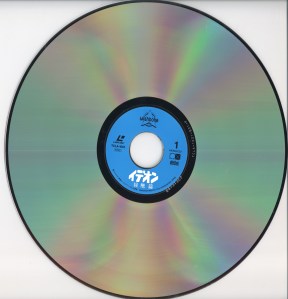
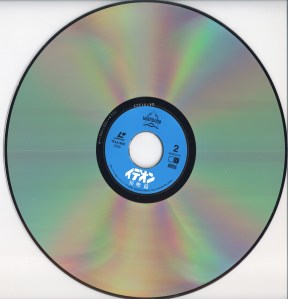
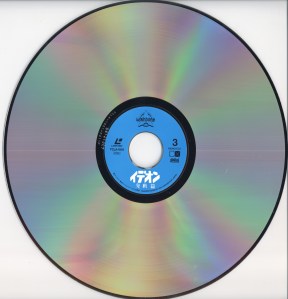
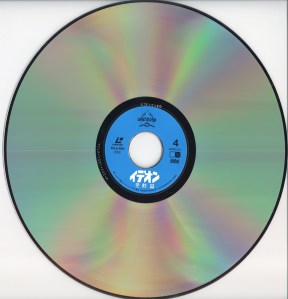
 Analog Music Storage